


/file/publisher-c1a3f893382d2b2f8a9aa22a654d9c97/2025/12/ae0e53543d2e6a0ef8770a12379a43c7.jpg)

Dr M wants Anwar probed for sabotage in 'one-sided' trade deal with US
Former prime minister Dr Mahathir Mohamad has lodged a police report against Prime Minister Anwar Ibrahim over alleged “treason” involving the controversial Malaysia-US reciprocal trade deal signed in October.
He also requested the authorities to investigate officials from the Investment, Trade and Industry Ministry, the attorney-general and all parties involved in the preparation, negotiation and finalisation of the deal.
Former prime minister Dr Mahathir Mohamad has lodged a police report against Prime Minister Anwar Ibrahim over alleged “treason” involving the controversial Malaysia-US reciprocal trade deal signed in October.
He also requested the authorities to investigate officials from the Investment, Trade and Industry Ministry, the attorney-general and all parties involved in the preparation, negotiation and finalisation of the deal.
In the report lodged this morning at the Putrajaya district police headquarters, Mahathir said he believes Anwar has committed a “very serious offence” under Section 124B of the Penal Code for allegedly carrying out activities that are detrimental to parliamentary democracy or Section 124C for attempts to commit such an act.
He also believes that Anwar could be investigated under Section 124K of the Code for alleged sabotage to the country, which carries life imprisonment.
“I am lodging this report because I truly believe (the agreement) poses a great risk to Malaysia’s sovereignty, national security and the future of the country’s strategic resources.
“Anwar’s action, in my opinion, has affected the country’s position and risks threatening Malaysia’s economic and political sovereignty.
“Based on my research into the contents of (the agreement, there are several clauses) that give me confidence that the action is an act of sabotage that brings harm to the country, and is carried out for the interests of foreign powers,” said the police report sighted by Malaysiakini.
Among the clauses that he wants the authorities to investigate are Articles 5.1, 5.2 and 5.3, as well as other clauses such as the restrictions on digital policy and domestic regulations, and those that affect the bumiputera interests and rights guaranteed under Article 153 of the Federal Constitution.
Potential elements of foreign influence
Mahathir also wants the authorities to investigate whether there are elements of foreign influence or actions that threaten national sovereignty and security, as well as if there are any elements of power abuse, serious negligence and possible breach of trust regarding the management and decisions involving the country’s rare earths and critical minerals.
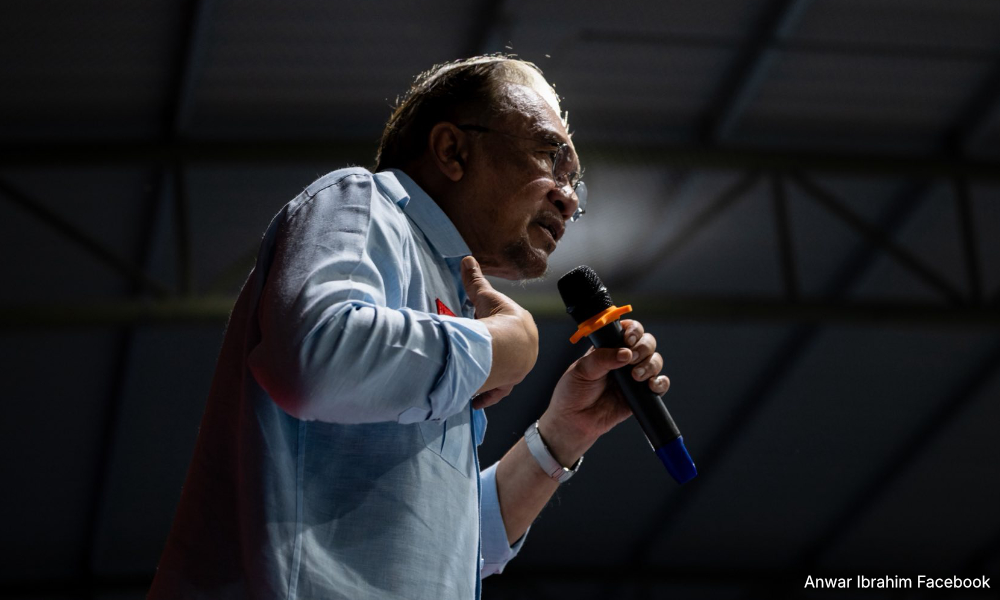
He also believes that Anwar’s action, in signing the deal, was taken without fully considering the interests of the country in which, in his opinion, can be considered an action by someone who disregards the country’s sovereignty.
This, he added, has the potential to drag the country into a situation where Malaysia is “pawned off” to foreign power influence.
“This agreement also allegedly obliges Malaysia to comply with conditions set by the US without adequate reciprocity, including a clause requiring Malaysia to obtain consent from the US before entering into agreements with other countries.
“All of these matters raise serious concerns for me, because, in my opinion, they eliminate Malaysia’s power to determine foreign policy, economic policy and the use of the country’s strategic resources independently and sovereignly,” he said.
Contentious trade pact
Inked on Oct 26 between Anwar and US President Donald Trump during the latter’s visit to Kuala Lumpur for the Asean Summit, the agreement includes provisions encouraging closer alignment with Washington on national security matters such as export controls, sanctions, and investment screening.
The trade pact also grants preferential access for American goods and services, while the US has exempted certain Malaysian exports from Trump’s 19 percent reciprocal tariff.
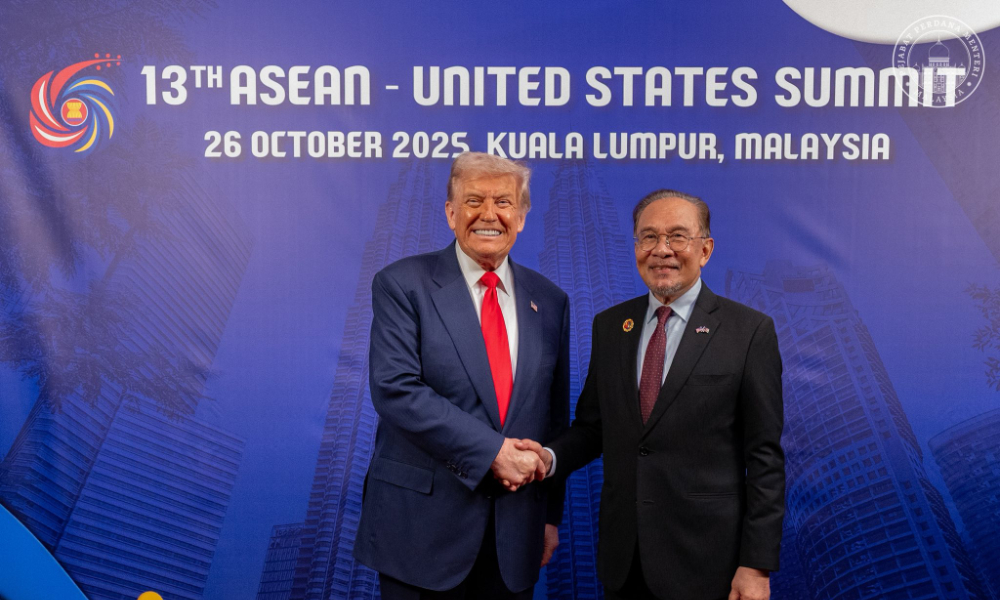
In return, Malaysia is expected to observe US trade restrictions tied to economic or national security concerns, align itself with US export controls and sanctions on sensitive technologies, and prevent Malaysian firms from facilitating sanctions evasion.
Putrajaya is also expected to explore mechanisms to screen inbound investments for national security risks, including those involving critical minerals and infrastructure.
Apart from Mahathir, the deal has courted plenty of backlash from other lawmakers, who lamented that it was “heavily lopsided” in favour of a foreign power.
Miti minister’s defence
In Parliament yesterday, Investment, Trade and Industry Minister Tengku Zafrul Abdul Aziz reiterated that Malaysia did not negotiate the trade agreement “from a position of comfort”, noting that the talks were held under the threat of Trump’s 25 percent tariff on almost all of Malaysia’s exports to the US.
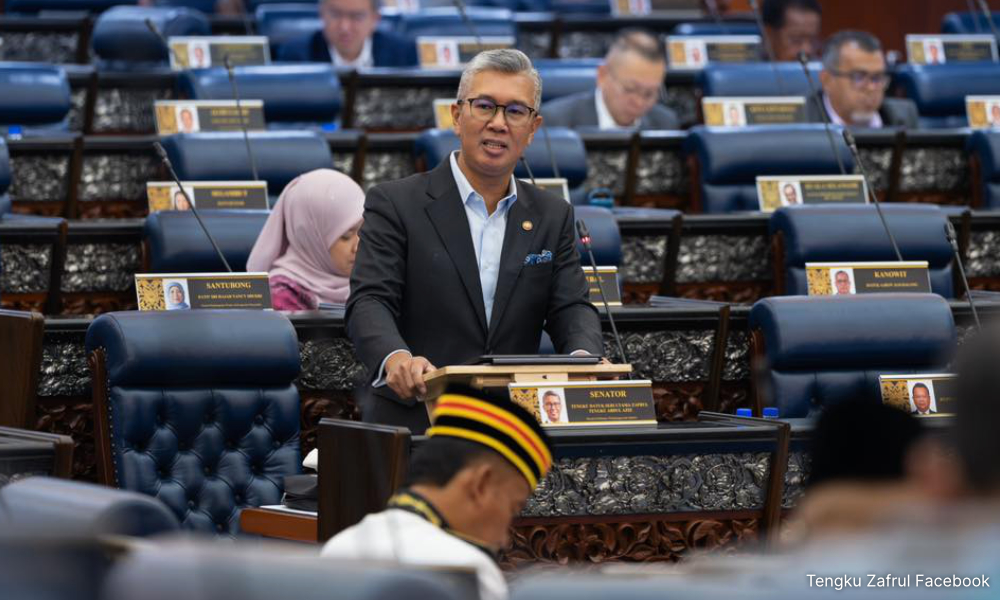
“Through the agreement, we capped the tariff (rate) at 19 percent, not 25 percent or higher. We locked in zero tariffs for 1,711 tariff lines, and we also succeeded in ensuring key products - even semiconductor products - remain exempt.
“When asked why Malaysia was among the earliest to sign (the trade agreement with the US), the answer is simple: because we were among the most exposed.
“Our export structure, dependence on the E&E (electrical and electronics) sector, as well as vulnerability to US tariffs, are far higher than several other Asean countries,” he added.
/file/publisher-c1a3f893382d2b2f8a9aa22a654d9c97/2025/10/e936cf0d67ef138d8ec2ecf2da244739.jpg)
/file/publisher-c1a3f893382d2b2f8a9aa22a654d9c97/2024/10/5f974941cc2ff66676393e6f77c6e03a.jpg)
/file/publisher-c1a3f893382d2b2f8a9aa22a654d9c97/2025/09/4f3dd0c69d8beb0471610f3a43a10b03.jpg)
/file/publisher-c1a3f893382d2b2f8a9aa22a654d9c97/2025/11/f4f1bd9e48e8ce03b79984cc9399dd6d.png)
/file/publisher-c1a3f893382d2b2f8a9aa22a654d9c97/2025/11/a420ada9917fdc3132150bfb65923d76.jpg)
/file/publisher-c1a3f893382d2b2f8a9aa22a654d9c97/2024/11/488a7d96ee328356d361d599a93c4477.jpg)


Are you sure you want to delete this comment?
This action cannot be undone.